We hear so much talk about boundaries these days that the very word almost loses its meaning.
Underneath all the talk, it’s really just about:
- Safeguarding your own energy
- Maintaining your own peace and still being able to show up for the people who need support because you are not running on empty
At For Your Smile Christian Counseling, this comes up often with people who’ve given everything they have for years and only recently noticed how empty that’s left them.
Boundaries and love aren’t in competition.
A lot of people assume setting a boundary means loving someone less – most of the time it’s actually quite the opposite.
Stepping back when you need to and saying no to something that isn’t yours to carry, doesn’t make you less caring toward the people around you.
It’s usually what lets that care hold up over time instead of quietly burning out.
A boundary just names what you can hold right now, and what you can’t. That’s not selfish. It’s closer to basic maintenance.
What it looks like when there aren’t any.
Long before anyone utters a word, resentment often begins to grow. When all your body wants to say is no. When people’s emotions and choices are in your arms like they are yours to hold and carry somehow.
No matter how much sleep you get, fatigue never goes away. Feeling pulled in five directions with nothing left over by the end of the day.
If that sounds familiar, it’s usually not a character flaw so much as something nobody ever taught – especially growing up in families or communities where constantly giving got mistaken for being a good person.
Faith doesn’t have to work against this.
Some people worry that setting boundaries makes them selfish, or somehow less generous than they should be. In practice, it’s usually the reverse.
A life poured out constantly, with nothing protected and nothing replenished, isn’t sustainable for anyone, and that includes people trying to live out their faith. Rest and limits aren’t a failure of care. They’re part of what makes care last.
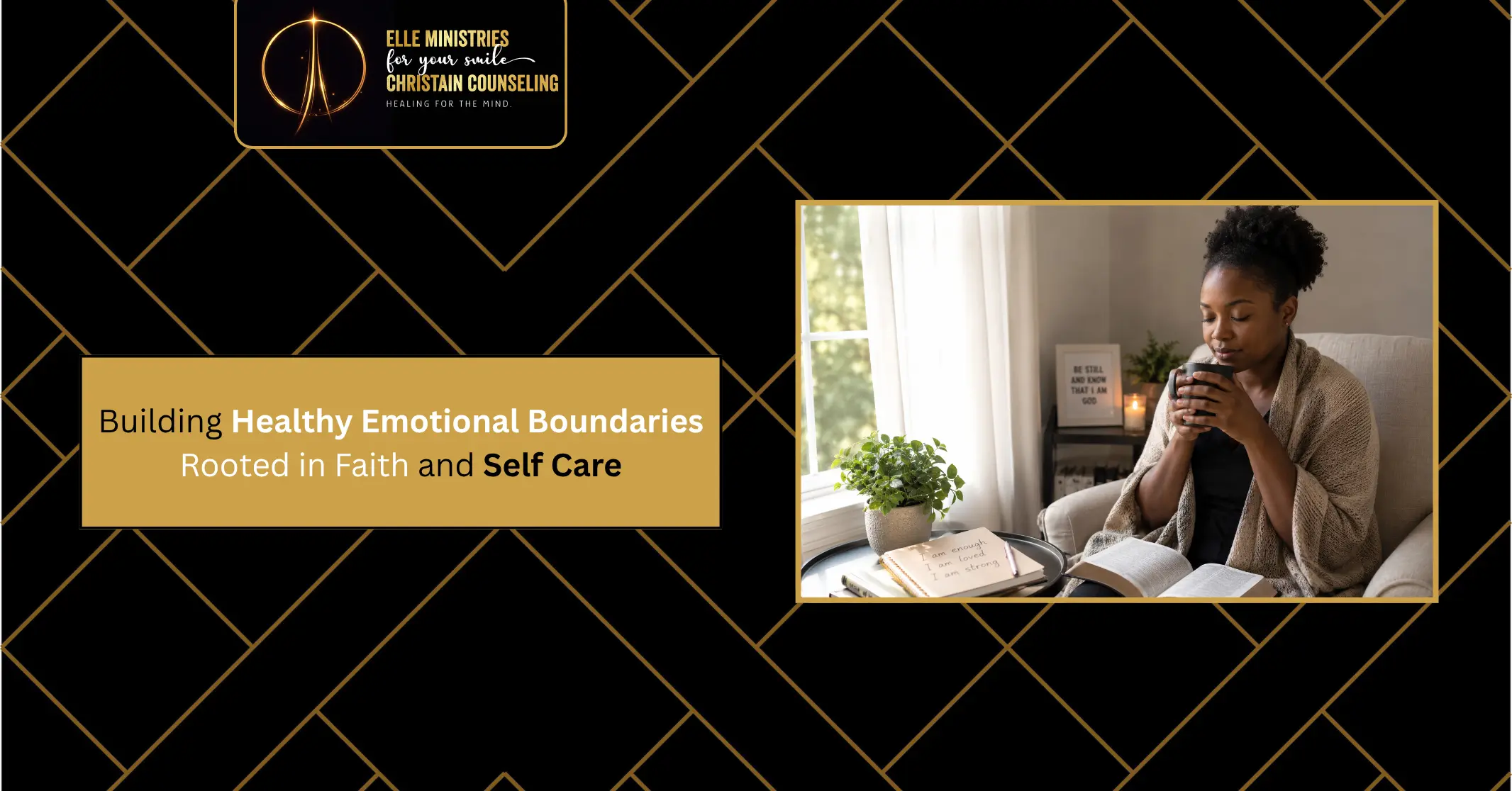
For people who want it, prayer and reflection can be part of working through this too, sitting honestly with where you’re running low and where guilt shows up the second you consider saying no.
What self-care actually means here.
Self-care isn’t indulgence, and it’s not selfishness dressed up in softer language. It’s more like maintenance, the kind that makes a steady, functioning life possible in the first place.
Sometimes that’s protecting quiet time before the day pulls you in ten directions. Sometimes it’s saying no to something that was never really yours to take on even knowing someone will be disappointed.
A lot of the time it just means learning to actually receive support from other people instead of always being the one giving it.
Where counseling comes in.
Most people already know, on some level, that boundaries matter. Actually holding one, especially with family or people used to a certain version of you, tends to be a different kind of work entirely.
Counseling gives you room to untangle where the guilt is really coming from and how to hold a boundary without it turning into resentment.
At For Your Smile Christian Counseling, that work can include prayer and faith-based conversation for clients who want it, or stay more general for those who’d rather keep it that way.
If you’ve been running on empty.
Giving everything you have isn’t the same thing as living well, even though those two get confused pretty often. If you’ve been depleted for a while and aren’t sure how to change that without feeling like you’re letting someone down, this is exactly the kind of thing counseling can help sort through.
Reach out to For Your Smile Christian Counseling.
You can call us at (912) 891-4000.
Email careteam@foryoursmile.org to schedule a session.
Dr. Lakesha Dean provides Christian counseling and guidance rather than licensed clinical psychotherapy. Clients needing clinical mental health treatment are referred to a licensed provider.
No comment