When we think of disputes, we often picture strangers arguing over money or contracts. Yet, some of the toughest conflicts arise between those we love most.
I once knew a family facing this challenge.
After their father passed away, a mother and her two adult children inherited the family home. For years, that house held memories, birthday celebrations, holiday dinners and moments they cherished.
However, after their father’s death, the house became a painful source of conflict.
The mother wanted to keep the home. For her, it was more than just a building; it was a reminder of her husband and their life together.
Her son wanted to sell. Living in another state, he didn’t want the responsibility of maintaining an older home from afar.
The daughter had a different idea. She wanted to rent the house and create an income source for the family.
Initially, they thought they could resolve the issue through discussion. But every conversation grew more challenging.
The mother felt her children ignored her emotions. The son felt his wishes were overlooked. The daughter felt stuck, trying to keep peace while feeling overwhelmed.
The disagreement moved beyond the house.
It touched on years of hurt feelings, misunderstandings, and unresolved emotions.
Eventually, they considered going to court. But the thought brought more stress. They knew a lawsuit could cost thousands, take months or years, and further damage their family bond.
They didn’t want a courtroom battle.
They wanted a solution.
That’s when someone introduced them to a Georgia Court-Certified Mediator.
What Is a Georgia Court-Certified Mediator?
A Georgia Court-Certified Mediator is a specially trained person who helps people solve their problems without going to court. In Georgia, mediators handling court cases need to register with the Georgia Office of Dispute Resolution (GODR). This is a big deal because it means they have met strict rules set by the Georgia Supreme Court.
Unlike a judge, a mediator doesn’t decide winners or losers or force outcomes. They create a structured space for everyone to speak, listen and work towards an agreement.
The mediator helped them slow down, explain their concerns and look beyond the anger.
Georgia court-certified mediators complete specific training and meet requirements established through Georgia’s court-connected mediation programs. Their role is to stay neutral. They help people have productive talks, even when emotions run high.
The purpose of mediation is not to decide who is right or wrong. The purpose is to help people find a solution that works.
At For Your Smile Christian Counseling, Dr. Lakesha Dean is a Georgia Court-Certified Mediator who helps clients across the United States find peaceful and practical solutions to challenging conflicts.
Why Mediation Can Be Better Than a Court Battle
When disputes become emotional, communication often breaks down. People may stop listening, make assumptions, or focus only on defending their own position.
A mediator helps create a calm and respectful process where everyone has a voice.
More Control Over the Outcome
In court, a judge makes the final choice. The people involved may not have much control over the result.
In mediation, the people work together to agree. They can find solutions that fit their own needs.
In this family’s case, mediation helped them discover new ideas. They found choices they had not seen before.
Less Stress and Conflict
Legal battles can increase anger and damage important relationships.
Mediation focuses on cooperation rather than confrontation. It helps people address the problem without attacking each other.
This can be very important for families because family relationships often continue for many years.
Greater Privacy
Most lawsuits are public records. Personal disagreements may become part of the legal record.
Mediation offers a confidential alternative option for discussions to take place in a more relaxed environment.
Potential Cost Savings
Legal battles can be costly, involving attorney’s fees, court procedures and the investment of time.
Mediation can often assist parties in resolving their conflict without some of the costs, process, or delays of litigation.
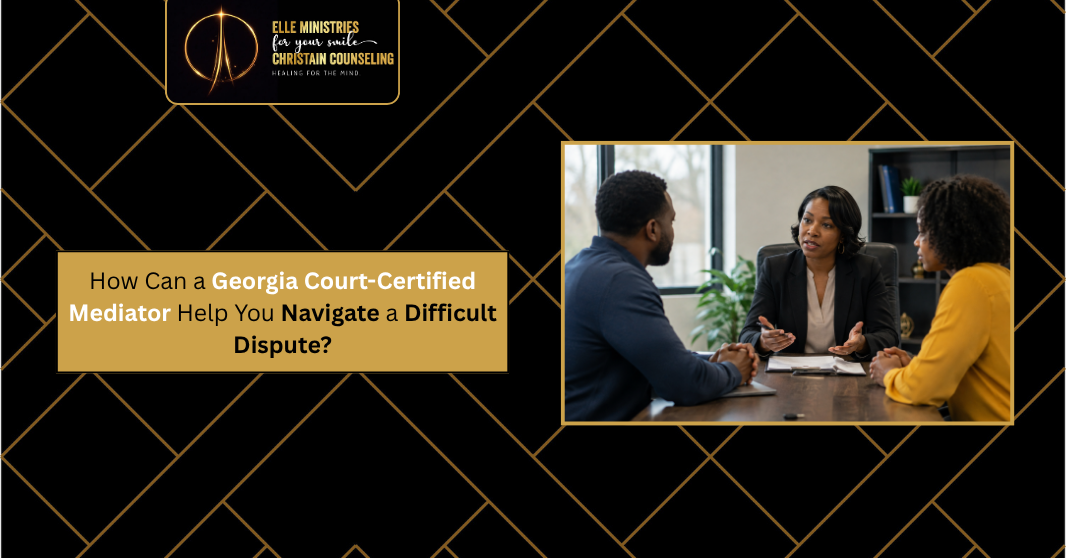
How Can a Georgia Court-Certified Mediator Help You Navigate a Difficult Dispute?
A mediator facilitates communication and conflict resolution. They help participants identify underlying issues.
Creating a Safe Space
Mediators set guidelines for respectful dialogue. This allows everyone to share their concerns and expectations.
Uncovering the Real Issues
Conflicts often involve deeper feelings beyond the surface disagreement. These can include:
- Fairness
- Trust
- Respect
Mediators help reveal these concerns to find meaningful solutions.
Exploring Options
Mediators guide participants in considering various choices. They help explore potential outcomes, leading to solutions that may not emerge during arguments.
How Mediation Helped This Family Move Forward
During their first mediation session, each family member had the opportunity to share their feelings.
The mother explained why keeping the home mattered so much. She shared that selling the property felt like losing another connection to her husband.
The son explained that he was not trying to hurt his family. He was worried about the financial and physical responsibility of maintaining a home from another state.
The daughter explained that she wanted to protect the family’s future and create an option where everyone could benefit.
For the first time in months, they were not arguing.
They were listening.
That is one of the greatest strengths of mediation. It helps people move from conflict toward understanding.
What Happens During Mediation?
The mediation process aims to ensure that all involved in the process feel prepared and comfortable.
Step 1: Initial Meeting
The mediator discusses the process, listens to questions and determines primary concerns that must be addressed.
Step 2: Sharing Perspectives
Everyone shares ideas, emotions and objectives. The mediator can help to maintain a respectful, focused conversation.
Step 3: Finding Solutions
Participants discuss potential agreements and use negotiation to determine options that satisfy all.
Step 4: Creating an Agreement
When both sides have resolved, they can write down the agreement. Depending on the situation, additional legal steps may be needed to make the agreement enforceable.
Mediation assisted the family that had inherited the property to develop the mediation plan by balancing all concerned and preserving the relationship.
What Kinds of Disputes Can Mediation Help With?
Mediation can assist with various types of disputes. Here are some common areas where mediation is helpful:
Family Disputes
This includes divorce, child custody, visitation and child support. It also includes disputes between parents and children, or between siblings.
Elder Care Disputes
Elder care disputes often arise when families disagree on how to care for ageing parents. Key issues include:
- Decision-making
- Payment for care
- Living arrangements
Mediation can help families find answers.
Inheritance Disputes
Inheritance disputes may occur after a loved one’s death. Family members might clash over the will. Mediation can help them respect the deceased’s wishes while achieving a fair resolution.
Business Disputes
Business disputes can involve disagreements among partners. Common issues include:
- Operations
- Employee complaints
- Customer concerns
Mediation offers a way to address these issues without resorting to court.
Landlord-Tenant Disputes
Landlord-tenant disputes may arise, but mediation can facilitate a solution that satisfies both parties.
Neighborhood Disputes
Neighborhood disputes can involve issues such as:
- Fences
- Noise
- Pets
Mediation can help resolve these conflicts, restoring harmony in the community.
Common Myths About Mediation
Myth: Mediation Means Someone Must Admit Fault
Mediation is not about blaming someone. It is about understanding the problem and finding a resolution.
Myth: A Mediator Makes the Final Decision
A mediator does not act as a judge. The participants make their own decisions.
Myth: Mediation Only Works for Simple Problems
Mediation can help with complicated disputes involving strong emotions, finances, relationships and legal concerns.
Choosing the Right Court-Certified Mediator in Georgia
Choosing the right mediator is important.
Look for someone who:
- Has Georgia court certification
- Has experience helping with conflicts
- Communicates clearly
- Creates a fair and respectful space
- Understands the importance of privacy and trust
A good mediator helps everyone feel heard while staying neutral.
A Better Way Forward
A family entered mediation thinking they were fighting over a house but realized they were actually fighting for their relationship.
Disputes are common in families, couples, businesses and communities, but conflict doesn’t have to sever connections.
A Georgia Court-Certified Mediator can facilitate communication, help find common ground and create solutions for moving forward.
If you’re facing a tough dispute, Dr. Lakesha Dean at For Your Smile Christian Counseling can assist. She combines mediation skills with faith-based compassion to support individuals, couples, families and organizations nationwide.
You can resolve conflict. Contact us to learn more and schedule a consultation.
FAQs
How much does mediation cost in Georgia?
The cost can vary. Private mediators often charge between $200 and $400 per hour. However, many Georgia counties offer free or low-cost mediation services through their court programs. The cost also depends on the type of case.
What is the difference between a “certified” and a “registered” mediator in Georgia?
A registered mediator has completed necessary training and adheres to Georgia’s dispute resolution rules. A certified mediator may have extra training for specific cases. Both meet essential standards, so consider their training and experience when selecting one.
No comment